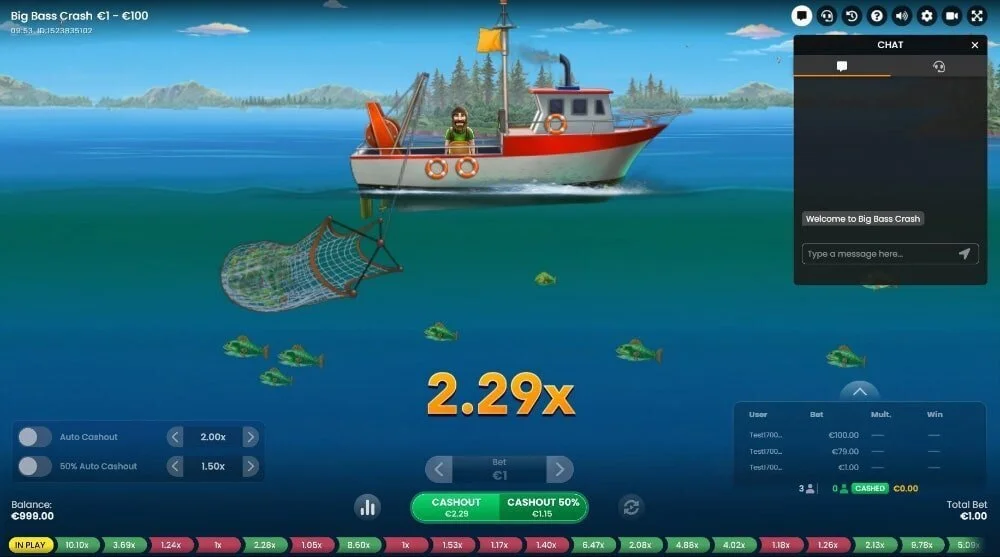
The online gaming scene is crowded bigbasscrashcasino.ca. Titles rise and fall all the time. A game that endures does so because it learns and changes. Right now in Canada, something interesting is happening with the Big Bass Crash game. Its developers made a clear choice. They chose to listen to their players. They didn’t just open a suggestion box and forget about it. They established direct channels to their Canadian community, actively collecting, organizing, and implementing player feedback to shape the game. This isn’t about addressing small glitches. It’s about a new approach of building a game, where Canadian players help draw the map for what comes next. The game now fits what its audience expects. That creates a feeling of belonging and trust you don’t see every day. For a game all about the thrilling instant before a multiplier crashes, this focus on player input has become its most dependable feature.
Canadian Player’s Voice: An Open Line to Developers
Usually, playing an online game in Canada is like a monologue. You receive a finished product. Your ideas disappear into a black hole. The Big Bass Crash team aimed to change that feeling from the start. They created several easy ways for their Canadian community to be heard. They opened dedicated threads on big gaming forums. They organized social media campaigns to listen on platforms Canadians use. They even added a simple feedback tool inside the game itself, so players could share thoughts without stopping their session. The real trick was not only making these channels. It was making sure players knew they worked. Anyone who submitted feedback got an automatic confirmation that their message was received. Community managers regularly published updates about what topics players were talking about most. This started a cycle. Players saw others getting a response, so they became more comfortable sharing their own detailed ideas. They knew a person would read it, not just a computer ticket system.
Upcoming Plans: Shaping Together the Next Big Features
The feedback project has grown. It’s presently a model for collaboratively developing what comes next. The developers have moved beyond problem-solving. They’re engaging the Canadian community to help conceive new features. They employ polls and focused discussion groups to test early concepts with players. Right now, the community is helping generate ideas for new bonus round mechanics, social features for friendly competition, and unique seasonal events. One player concept for a “Northern Pike” bonus mode is getting real attention from the design team. Bringing players in at this early stage minimizes risk. It stops the team from spending time and money creating something players don’t actually want. This forward-looking collaboration guarantees the game grows in a direction players care about. That’s how a game remains relevant and thrilling in a market like Canada’s.
Building Trust Through Transparency and Responsiveness
When users feel acknowledged, they stay engaged. In Canada, where fairness is highly valued, the Big Bass Crash team’s transparent method has rapidly earned confidence. They regularly share update articles with a clear label: “You Spoke, We Listened.” These posts list exactly which feedback items made it into the latest update. Every entry references the forum discussion or community chat that initiated it. This conveys a distinct narrative of collaboration. Their response to problems also builds trust. One evening, server lag hit players in Ontario. The team reacted swiftly. They were upfront about the issue, apologized, and sent automatic compensation to every affected account. Contrast that with the industry’s tendency for silence or ambiguous announcements. The contrast in player reactions is significant. On forums, players are more understanding and helpful when issues pop up. They have faith the group is striving to make proper decisions. That conviction is the greatest advantage a game can hold.
Major Gameplay Upgrades Based on Community Input
You will notice the effects of this feedback loop directly in the style Big Bass Crash functions. Canadian players, who tend to appreciate both fast action and thoughtful strategy, provided many recommendations that were included in the game. One of the first big changes involved a new autoplay function. The initial version was basic, just duplicating bets. Players demanded more control. They sought to set stop-loss limits, win targets, and automatic cash-out points at specific multipliers. Adding these options altered autoplay. It evolved from a simple convenience to a true tool for controlling risk. Another change came from visual feedback. Some players noted the rocket’s multiplier climb was difficult to track when it accelerated fast. The team responded. They implemented clearer visual markers and an option for a bigger, on-screen multiplier display. These are not merely small tweaks. They transform how players engage with the heart of the game, reducing frustration and incorporating more strategy.
Adapting the Experience: Adaptation Further than Language
For numerous games, making a edition for Canada means converting text into English and French. The Big Bass Crash project dug deeper. Real localization involves grasping cultural and practical details. Player feedback indicated where to go further. This led to adding payment methods Canadians know and rely on for deposits and withdrawals, which is vital for convenience and security. The game’s bass fishing theme works everywhere, but the team included small touches based on suggestions. You might see visuals inspired by Canadian lake scenery during special seasonal events. They also modified how customer support operates to meet Canadian expectations for quick, clear help. Special tournaments and bonus events now coincide with Canadian holidays and long weekends, when more people are online to play. This kind of detail shows respect for the player’s world. It renders the game feel less like an import and more like something created for them.
From Idea to Implementation: The Feedback Implementation Process
Getting feedback is step one. Turning it into a real game update is a much bigger task. The team established a strict system to manage all the feedback from Canadian players. First, every piece of feedback gets sorted. It goes into groups like “Gameplay Mechanics,” “Visual/Audio Design,” “Performance Issues,” and “New Feature Requests.” Then a team examines each category. This team comprises game designers, developers, and data analysts. They don’t base decisions only on popular opinion. They match it with numbers. If many players suggest a new bet level, the analysts review data to see if players are departing at certain stake points. The best ideas that are also feasible to implement get included in a public roadmap. The openness here is important. The developers share what they’re doing, and also detail why some popular ideas might need time or aren’t feasible. They provide these reasons in plain language, without technical jargon. This honesty, even when the news isn’t what players wanted, has built a strong layer of trust.
How to Contribute Your Feedback Constructively
As a Canadian player hoping to join this discussion, your method of giving feedback counts. Looking at their process, the recommendations that gain action share a few things. They are specific and helpful. Don’t just stating “the game is boring.” Instead, offer something like, “After an hour, the wait between big wins loses my attention. Maybe a small visual reward every 10th cash-out would help.” Additionally, consider what’s feasible. Big ideas are excellent, but suggestions that fit with the game’s existing mechanics often get implemented faster. To make sure your input makes a difference, adhere to these steps:
- Employ the in-game feedback tool for rapid bug reports or comments while you’re playing.
- Regarding larger feature ideas, go to the official community forum. Look first to voice your agreement to related ideas, or start a in-depth new topic.
- Describe the problem clearly. If possible, suggest a practical way to resolve it.
- Take part in official polls and surveys. The team uses this data immediately to choose what to focus on.
View it as a exchange. The developers have demonstrated they are listening. When you give straightforward, thoughtful feedback, you assist shape the game you enjoy.
What is occurring with Big Bass Crash in Canada shows what community-driven development is capable of. Through establishing real feedback channels, using a clear process to act on that input, and carefully adapting the experience for local players, the game has established a feeling of partnership. The improvements to gameplay, localization, and communication are more than simply updates. They are the components that foster trust and loyalty. In an industry where developers commonly appear removed from their players, this open dialogue has done two things. It has rendered the game improved, and it has formed a dedicated community that senses involved in the game’s success. By listening to its Canadian players, Big Bass Crash has found a way to persist.